

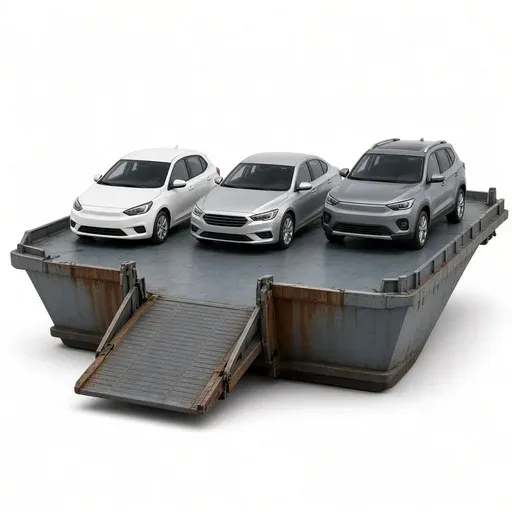
394,410
Passenger vehicles shipped China → Brazil
Jan–Jun 2026, +158.6% year on year. Gasgoo Automotive Research Institute, 11 Aug 2026.
 BEIJING TIME:

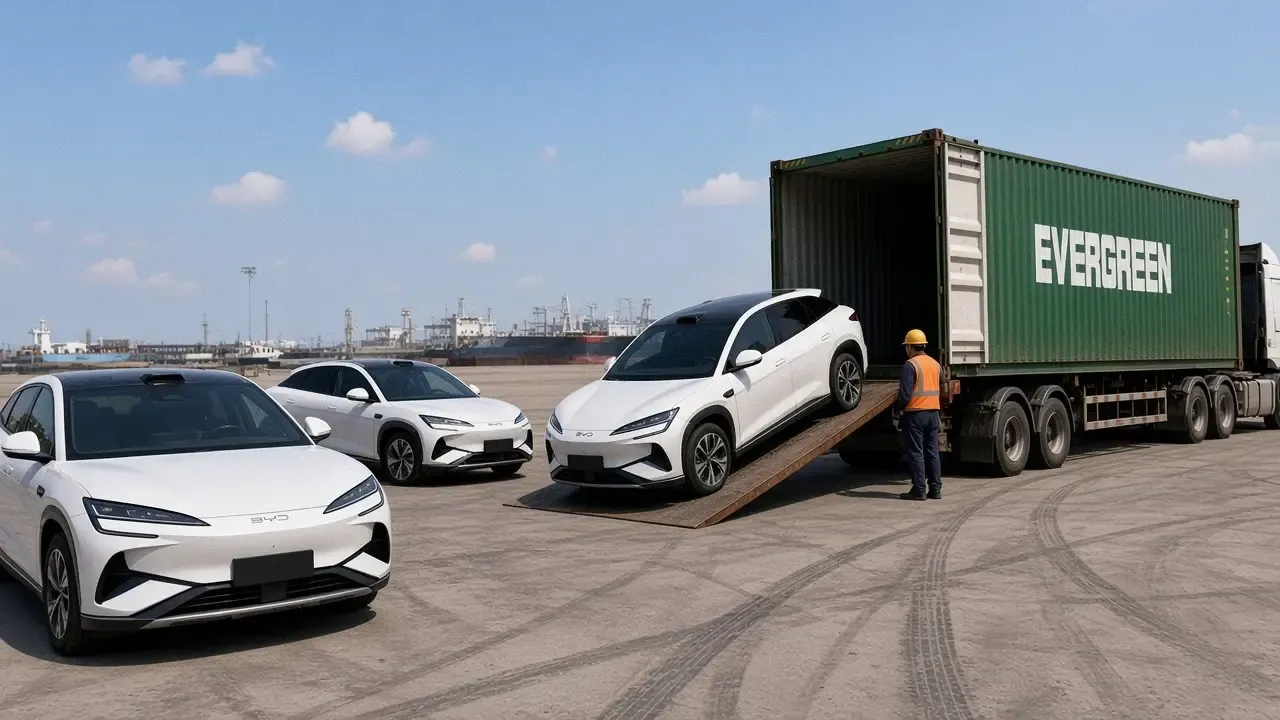
Latin America · left-hand drive
This desk is the left-hand-drive export record for Latin America. Before the booking we lock the architecture, the customs heading and the certificate of origin to one car. After discharge, that VIN is still the parts key and the diagnostic key. Guyana and Suriname are right-hand drive and sit outside it. The figures below are China export shipments for January–June 2026. They are not registrations in the destination country, and they are not JCHCAR volume.
394,410
Jan–Jun 2026, +158.6% year on year. Gasgoo Automotive Research Institute, 11 Aug 2026.
293,032
Same half, +158.8%. Brazil was the largest single destination for Chinese NEV passenger exports.
148,154
Jan–Jun 2026, −33.7%. The drop follows Mexico’s tariff decree, not a weaker product.
In the first half of 2026, Brazil was the second-largest destination for all Chinese passenger-vehicle exports and the first for new-energy passenger vehicles. Gasgoo ties the Brazil rush to stocking ahead of the July step-up on semi-knocked-down electrified imports. Mexico went the other way: 148,154 passenger units, down a third, after the Diario Oficial raised the import duty on the vehicle lines that Chinese-origin cars actually use. The rest of the left-hand-drive map — Chile, Peru, Colombia, the River Plate, Central America — does not show up in that top-ten table. Those markets are real, they are just not the volume. A dealer in Asunción or San José should not price a container off a Brazil headline.
Homologation and the customs heading follow the hardware, not the badge on the liftgate. A workshop that still thinks in timing belts and torque converters will mis-order the car and mis-file the pedimento.
One or two e-axles: motor, single-speed reducer, inverter, resolver. No engine, no multi-speed transmission. Pack voltage is 400 V or 800 V. The inverter is IGBT or silicon carbide. The inlet on a Latin American export car is usually CCS2, not the domestic GB/T plug. Mexico’s amended line for this architecture is 8703.80.01, electric, except used.
A dedicated hybrid transmission can clutch the engine to the wheels. Spark-ignition plug-in hybrids sit in 8703.60; compression-ignition in 8703.40. BYD DM-i and the GWM DHT families are this machine, not a conventional hybrid with a small belt-driven motor. The fuel tank, the engine ECU and the e-axle are all on the same VIN.
The engine is a generator. The wheels are driven only by the e-motor. Marketing departments call that an EV. Customs usually does not. File it as a plug-in hybrid unless your broker has a ruling that says otherwise. A wrong 8703.80 declaration is how a box earns storage.
These are China-production cars the desk is asked to quote. A configuration is offered when the factory can allocate it and the destination can homologate it. This is not a stock list, and it is not a retail offer. The VIN on the invoice is the VIN the workshop services.
On the Mexico file the nameplates are the 2026 Sealion 06 EV and the 2026 Seagull, sold in Mexico as Dolphin Mini. Sealion 7 is a different midsize electric SUV, sold in Mexico from 2025 and introduced in Chile in 2026; in China that car is the Sealion 07. Song Plus is a separate plug-in crossover. In Brazil, Dolphin Mini and Song Pro also leave Camaçari as local assembly, which is a different parts catalog from a China-export VIN. We quote the VIN you will actually receive.
Deepal is Changan’s electric brand. S05 is the compact crossover; S07 is the larger family SUV, in battery-electric and range-extender versions. Both are 2024–2026 production, the age of car a South American importer can usually clear, rather than a model that has only just reached the Chinese market.
Xiaomi Auto’s SU7 sedan and YU7 SUV are 2025–2026 China nameplates. A trim is quoted when allocation and homologation both exist. The high-voltage harness, the drive unit and the pack are ordered as separate parts after delivery.
These are SAIC Audi cars built for China, not Ingolstadt production. E5 Sportback went on sale in China in September 2025. E7X, the electric SUV, went on sale in China in May 2026. The badge does not put them on a European Audi parts depot. Service follows the China-export VIN.
Zeekr, Avatr and GWM sit with BYD and Deepal in the cars dealer groups request alongside Xiaomi and SAIC Audi. An 800 V Zeekr and a 400 V compact do not share a charger or a DC inlet. We name the architecture on the quote so your workshop orders the right part.
There is no single Latin American car tariff. A preference exists only where a China agreement is in force and the certificate of origin matches the VIN. The lines below are government texts that do not close on 31 December 2026. A reduced rate or a quota that ends this year is not the 2027 file. Your broker files the rate in force the day the declaration is numbered. This page is not a customs ruling.
| Market | Instrument | What it does to a China-origin car |
|---|---|---|
| Mexico | DOF, 29 Dec 2025, in force 1 Jan 2026 | China has no FTA with Mexico, so the general column of this decree applies. On the published table, 8703.80.01 (electric, except used), 8703.60.99, 8703.40.99, and the gasoline and diesel lines 8703.22.99, 8703.23.99, 8703.24.99, 8703.32.99 and 8703.33.99 are set at 50. The export column is exempt. The published transitory articles start the decree on 1 January 2026 and set no end date. The fourth article lets the Ministry of Economy open a supply mechanism later for origins without an FTA. That mechanism is not an exemption you can book today. IVA and the pedimento sit on top. |
| Brazil | MDIC, Gecex 238th meeting, 23 Jun 2026 | Gecex kept the electrified-vehicle schedule. From 1 January 2027 that schedule puts a built car, an SKD car and a CKD car at 35% import duty. China has no FTA with Brazil that removes it. IPI, ICMS and PIS/COFINS are a second calculation. A 14% CKD rate and a zero-duty CKD/SKD quota both end on 31 December 2026, so they are not the 2027 file. |
| Chile | China–Chile FTA, in force. SUBREI | The agreement rate is claimed with the certificate of origin, and only on a line that is not on the exclusion list. A missing certificate, or an excluded 8703 line, falls back to the general duty. IVA is still due. Confirm the live line with Servicio Nacional de Aduanas before the deposit. |
| Peru, Ecuador, Costa Rica, Nicaragua | Five China FTAs in force. MOFCOM FTA network | An agreement in force is not a zero on the passenger car. Peru’s schedule is read line by line. Ecuador’s annex uses staging categories that run as far as 17 and 20 years on some goods. Nicaragua’s text records the control on vehicles older than seven years. Costa Rica still runs REVETEC and the selective consumption tax beside any preferential customs duty. |
| Honduras | Early-harvest arrangement, in force 1 Sep 2024 | Signed 7 February 2024, with mutual effect from 1 September 2024. The arrangement sets no end date. The zero-tariff commitments are Annex I. China’s 2026 tariff plan continues the early harvest from 1 January 2026. The full FTA is still under negotiation. A passenger car takes the annex rate only if the heading is listed there. |
| Argentina, Uruguay, Paraguay, Colombia, Bolivia, Guatemala, El Salvador, Panama, Dominican Republic | MFN or Mercosur external tariff, plus the national license | No China FTA is in force. Talks with El Salvador are not an agreement. Argentina’s cost is usually the second filing and the storage, not a rate printed on this page. Bolivia’s ocean leg ends in Chile; the MIC/DTA and Aduana Nacional are a second regime. We will not type a single percent over customs codes we have not opened. |
MOFCOM’s FTA network records five agreements with Latin America, all in force and without a 2026 expiry: Chile, Peru, Costa Rica, Ecuador and Nicaragua. China’s Tariff Commission Announcement 2025 No. 11, the 2026 tariff plan, continues those agreement rates from 1 January 2026, with further cuts for Peru, Nicaragua and Ecuador, and continued application for Chile, Costa Rica and the Honduras early harvest. The 2027 rate sheet is the next annual plan. Mercosur has no FTA with China. Mexico, Brazil, Argentina, Colombia, Uruguay, Paraguay, Bolivia, Guatemala, El Salvador, Panama and the Dominican Republic are not on that list. Honduras has an early harvest, not a full FTA. Peru’s optimization protocol is signed and, on Peru’s own agreements page, is still pending entry into force. The WTO Trade Facilitation Agreement has been in force since 22 February 2017. It disciplines release, clearance and transit. It does not set the duty on heading 8703.
| Partner | Status in 2026 | Use it for a car only if |
|---|---|---|
| Chile | In force October 2006. Upgrade in force 2019. | The 8703 line is outside the exclusion list, and the certificate of origin matches the VIN and the invoice. The upgrade protocol was signed in 2017 and took effect in 2019. |
| Peru | In force 1 March 2010. Upgrade not yet in force. | The 2010 schedule is the text in force. Peru lists the optimization protocol as signed and pending entry into force. Do not book the upgrade. Do not assume the car’s staging category is already zero. |
| Costa Rica | In force since 2011. Agreement text. | The preferential rate, REVETEC and the selective consumption tax are three separate checks. One of them being open does not close the other two. |
| Ecuador | In force 1 May 2024. | The annex category for that 8703 subheading has reached zero. Several categories were written on 17- and 20-year clocks. Day-one zero on other goods is not a zero on the car. |
| Nicaragua | In force 1 January 2024. | The vehicle is inside the age rule the agreement records, and that tariff line has finished its staging. A car outside the age rule does not take the preference. |
| Honduras | Early harvest in force 1 Sep 2024. Full FTA not signed. | Annex I is the concession list. Tariff Commission Announcement 2025 No. 11 continues the early harvest in the 2026 tariff plan. Announcement 2024 No. 7 was the first rate sheet, for goods originating in Honduras. It is not a blanket zero on a China-origin passenger car entering Honduras. The arrangement itself has no end date. |
| WTO members | Trade Facilitation Agreement, in force 22 Feb 2017. | The agreement covers release, clearance, transit and customs cooperation. It does not cut the import duty on a passenger car. A member’s benefit is the provisions it has accepted, not a tariff preference. |
Tesla’s Lingang factory is the reference, not our product. It pulled cells, megacastings, e-axles, high-voltage harnesses and thermal hardware into one Yangtze River cluster, with an export pier at the end. BYD, Changan, SAIC and Geely draw on that same belt. JCHCAR does not cast the underbody. We buy a finished architecture from it and keep the VIN serviceable after the ship.
01
LFP blade or NMC modules, with the BMS in the pack. An export calibration is not the domestic GB/T-only pack. Altitude and tropical ambient both show up here first.
02
Motor, reducer, inverter, resolver. This is the part a shop used to call a transmission. Silicon-carbide inverters and 800 V axles do not interchange with a 400 V IGBT unit because the badge looks similar.
03
Heat pump, chiller, electric compressor, a separate battery loop. La Paz and Santos are not the same refrigerant and fan map. The valve block is a parts order, not a recharge.
04
PDU, onboard charger, DC-DC, CCS2 inlet, orange harness. A loose replacement pack is UN3480. The car in the container is UN3171. They do not share a booking.
05
Megacast front or rear sections do not straighten like a stamped unibody from a body shop manual written for gasoline cars. Collision method comes from the factory sheet, not from habit.
06
Invoice, packing list, origin, bill of lading, and a VIN list that states BEV, PHEV or EREV in the same words as the heading. The yard matches that file to the VIN.
We sit with your broker before the booking and lock the architecture, the heading and the certificate of origin to one car. Class 9 for the vehicle. No rewritten invoice, no invented origin, no promise that an FTA zero applies until the schedule says so. After discharge, the same VIN is the parts key and the diagnostic key.
The order is the pack, the BMS, the PDU, the OBC, the DC-DC, the e-axle, the resolver, the CCS2 inlet, the harness, the e-compressor. It is picked against the export VIN. A locally assembled cousin with the same badge is a different bill of materials.
CarPartsCertified dealers open a China-network diagnostic session on JCHCAR units when the local OEM portal rejects the export ECU. Beta. It reads the car. It does not change IGI, II, or a closed import license.
CarLiveShipment figures are China export compilations for January–June 2026, not local registrations and not JCHCAR volume. Tariff lines, quotas and FTA staging change. This is not legal, tax or customs advice. Your broker numbers the declaration.